
Eden Prairie Wood Flooring builds, replaces and refinishes hardwood stairs in Eden Prairie, MN, with 20+ years of stair and flooring work behind it. Stairs sit at the center of a house and take more traffic per square foot than any floor in it, which is why they wear first, show every shortcut, and are the part of a flooring project most often left to last and regretted.
A staircase is also the one place where flooring becomes carpentry. Treads, risers, nosings, skirtboards, stringers and a railing all meet within a few inches, the tolerances are tight, and every rise in a flight has to match the others closely or the stairs feel wrong underfoot. None of that is a job for guesswork with a saw at the top of the stairs.
We work stairs the way we work floors: measure first, say what is actually there, and write the plan down. That means checking what is under the carpet before promising a result, measuring every rise before proposing retrofit treads, and testing stain on the treads themselves alongside the floor they run into, because a staircase that does not match the landing is the first thing a visitor sees.
Parts of a Hardwood Staircase
Treads, Risers and Nosings
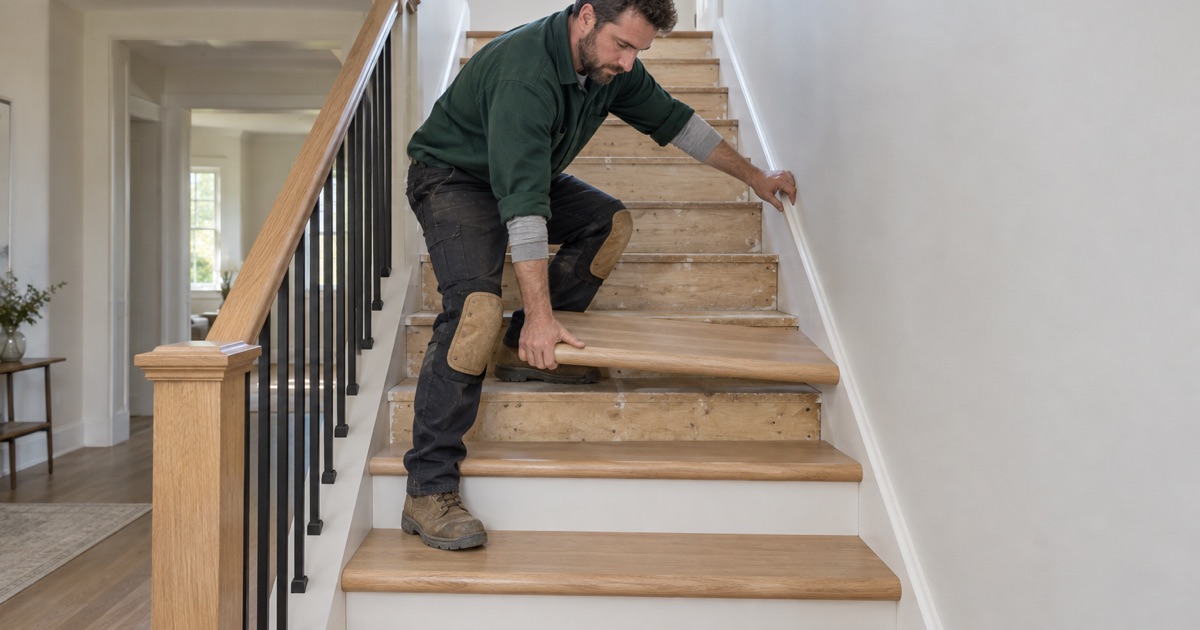
The tread is the surface you step on, the riser is the vertical face between one tread and the next, and the nosing is the rounded or profiled front edge that overhangs the riser. Each can be a different material and often is, particularly on a staircase built to be carpeted. We identify all three before quoting, since replacing one and refinishing another is common and needs planning.
Stringers, Skirtboards and What Is Behind the Carpet
The stringers carry the treads, and the skirtboard is the finished board running up the wall alongside them. On a carpeted flight the skirtboard is frequently missing or unfinished, because nobody was ever meant to look at it. Adding or refinishing it is what makes a converted staircase read as built rather than covered, and it is easy to overlook when pricing the job.
Balusters, Newels and Working Around a Railing
Balusters and newel posts sit directly in the working area and can rarely be removed casually, since the railing depends on them. We sand and finish around them by hand where they stay, and where they are being replaced we sequence that work against the treads so nothing finished gets damaged afterward. Railing work also has its own safety considerations that sit outside flooring.
Carpeted Stairs Taken Back to Wood
What Is Actually Under the Carpet
The honest answer is found by lifting a corner, not by assumption. Under the carpet there may be finished oak, construction-grade treads with a squared-off front edge and no nosing, plywood, or a mix over different parts of the flight. We look before recommending, because the difference between a refinish and a full tread replacement is decided entirely by what is there.
Retrofit Treads and Full Tread Replacement
Retrofit treads cap the existing structure and avoid dismantling the flight, which suits a sound staircase and keeps the job shorter. Full replacement removes the old tread entirely and is the answer where the existing ones are damaged, badly cut or too thin to cap. Either way the finished rise heights have to stay consistent through the flight, which we measure before committing to a method.
Squeaks and Movement Found Along the Way
Taking carpet off a staircase usually reveals why it creaked. Treads shrink away from stringers, wedges loosen, and fasteners work free over decades. With the carpet gone the access is as good as it will ever be, so we re-wedge, screw and glue what has moved while the flight is open rather than finishing over a staircase that will start talking again in a year.
Matching Stairs to the Floor They Join
Species, Stain and Sheen Across a Landing
Stair treads are commonly a different species or grade from the floor they meet, and red oak, white oak and hard maple take the same stain very differently. We test color on the treads and on the floor at the same time, in the light of the actual stairwell, and adjust rather than assuming one formula covers both surfaces. Sheen is matched as deliberately as color.
Refinishing Existing Treads
Where the treads are solid and thick enough, refinishing is the least disruptive route. Treads are sanded largely with orbital and hand work rather than a drum, since the surfaces are small and the nosings are profiled. We check the remaining thickness first, particularly on a flight that has been refinished before, and we say when a tread has too little left to sand safely.
Landings, Transitions and the Top Nosing
The top nosing is where the staircase meets the upper floor, and it is the detail that most often gives away a job done in a hurry. It has to align with the floor surface, carry the same profile as the treads below it and finish cleanly against the flooring. We plan it alongside the floor installation rather than fitting it afterward to whatever height the floor ended up at.
Finish, Safety and Living With the Work
Finishes That Hold Up on a Tread
Stairs take concentrated wear on the nosing and the front third of each tread, so the finish specification matters more here than on an open floor. We use durable waterborne or oil-modified coatings, build the coats on the wear areas, and record the product and sheen so a future maintenance coat matches. Hardwax oil suits households that would rather spot-repair than recoat a whole flight.
Slip, Sheen and Stair Nosings
Wood is less forgiving underfoot than carpet, and a consistent rise and a correctly profiled nosing do more for safe footing than any finish choice. Sheen changes how the flight looks and how visible wear is, and a lower sheen tends to suit stairs. Where a runner is wanted, we prepare for it during the work instead of drilling into a cured finish later.
One Flight, One Household, and the Schedule
Most houses have one staircase, and a curing finish cannot be walked on. We plan around that before starting: alternate treads finished in stages so there is always a safe route, or the flight run on days the household is out. The dry and cure times go in writing, with a note that a cold house in January stretches both of them.
- 20+ Years Experience
- Free Written Quotes
- Moisture Readings on Every Quote